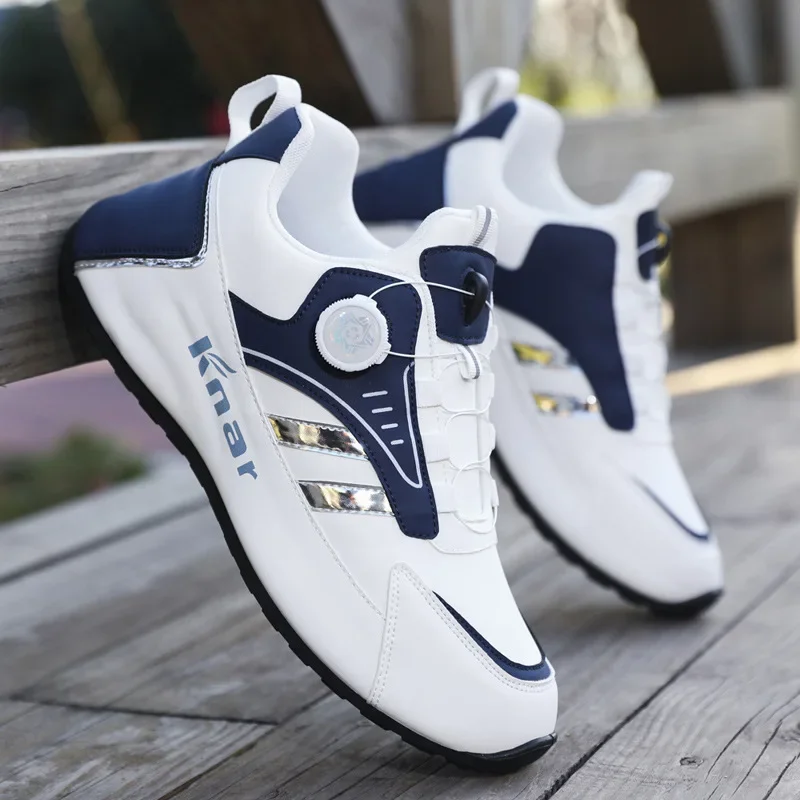
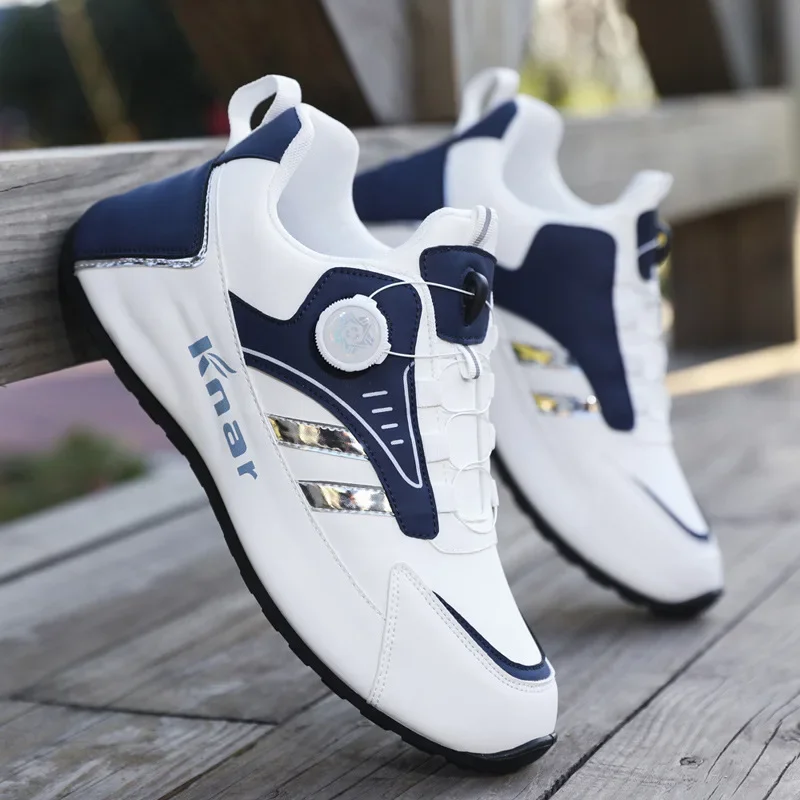
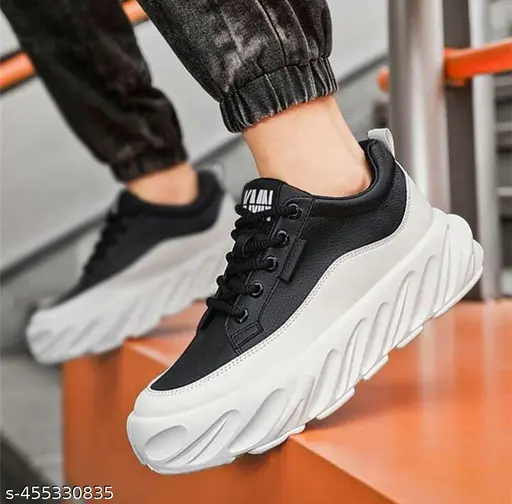
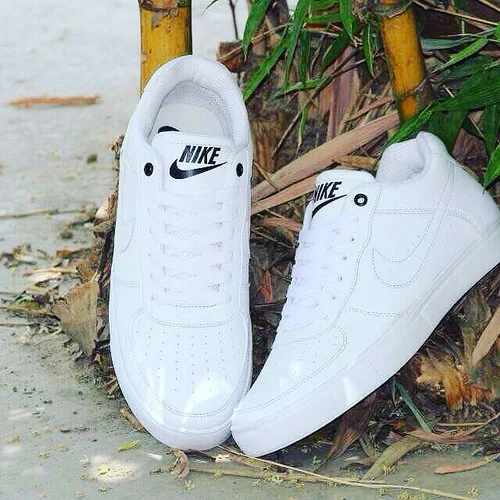
Sneakers
These shoes acquired the nickname ‘plimsoll‘ in the 1870s,[9] derived according to Nicholette Jones’ book The Plimsoll Sensation, from the colored horizontal band joining the upper to the sole, which resembled the Plimsoll line on a ship’s hull. Alternatively, just like the Plimsoll line on a ship, if water got above the line of the rubber sole, the wearer would get wet.[10]
Plimsolls were widely worn by vacationers and also began to be worn by sportsmen on the tennis and croquet courts for their comfort. Special soles with engraved patterns to increase the surface grip of the shoe were developed, and these were ordered in bulk for the use of the British Army. Athletic shoes were increasingly used for leisure and outdoor activities at the turn of the 20th century – plimsolls were even found with the ill-fated Scott Antarctic expedition of 1911. Plimsolls were commonly worn by pupils in schools’ physical education lessons in the UK from the 1950s until the early 1970s.[citation needed]
British company J.W. Foster and Sons designed and produced the first shoes designed for running in 1895; the shoes were spiked to allow for greater traction and speed. The company sold its high-quality handmade running shoes to athletes around the world, eventually receiving a contract for the manufacture of running shoes for the British team in the 1924 Summer Olympics. Harold Abrahams and Eric Liddell won the 100 m and 400 m events, kitted out with Foster’s running gear.[11]

This style of footwear also became prominent in America at the turn of the 20th century, where they were called ‘sneakers’. In 1892, the U.S. Rubber Company introduced the first rubber-soled shoes in the country, sparking a surge in demand and production. The first basketball shoes were designed by Spalding as early as 1907.[citation needed] The market for sneakers grew after World War I, when sports and athletics increasingly became a way to demonstrate moral fiber and patriotism. The U.S. market for sneakers grew steadily as young boys lined up to buy Converse All Stars sneakers endorsed by basketball player Chuck Taylor.
During the interwar period, athletic shoes began to be marketed for different sports, and differentiated designs were made available for men. Athletic shoes were used by competing athletes at the Olympics, helping to popularise them among the general public. In 1936, a French brand, Spring Court,[citation needed] marketed the first canvas tennis shoe featuring signature eight ventilation channels on a vulcanised natural rubber sole.
Description

Sneakers (US) or trainers (UK), also known by a wide variety of other names, are shoes primarily designed for sports or other forms of physical exercise, but are also widely used for everyday casual wear.
They were popularized by companies such as Converse, Nike and Spalding in the mid 20th century. Like other parts of the global clothing industry, shoe manufacturing is heavily concentrated in Asia with nine in ten shoes produced there.[1]
Names

Sneakers have gone by a variety of names, depending on geography and changing over the decades. The broader category inclusive of sneakers is athletic shoes. The term ‘athletic shoes’ is typically used for shoes utilized for jogging or road running and indoor sports such as basketball, but tends to exclude shoes for sports played on grass such as association football and rugby football, which are generally known in North America as “cleats” and in British English as “boots” or “studs”.


The word “sneaker” is often attributed to American Henry Nelson McKinney, who was an advertising agent for N. W. Ayer & Son. In 1917, he used the term because the rubber sole made the shoe’s wearer stealthy. The word was already in use at least as early as 1887, when the Boston Journal made reference to “sneakers” as “the name boys give to tennis shoes.” The name “sneakers” originally referred to how quiet the rubber soles were on the ground, in contrast to noisy standard hard leather sole dress shoes. Someone wearing sneakers could “sneak up”, while someone wearing standards could not.[2] Earlier, the name “sneaks” had been used by prison inmates to refer to warders (guards) because of the rubber-soled shoes they wore.[3] The term “sneakers” is most commonly used in Northeastern United States, Central and South Florida,[4][5] Australia,[6] New Zealand, and parts of Canada. However, in Australian, Canadian, and Scottish English, running shoes and runners are synonymous terms used to refer to sneakers, with the latter term also used in Hiberno-English. Tennis shoes and kicks are other terms used in Australian and North American English.
Related products
-
Scent
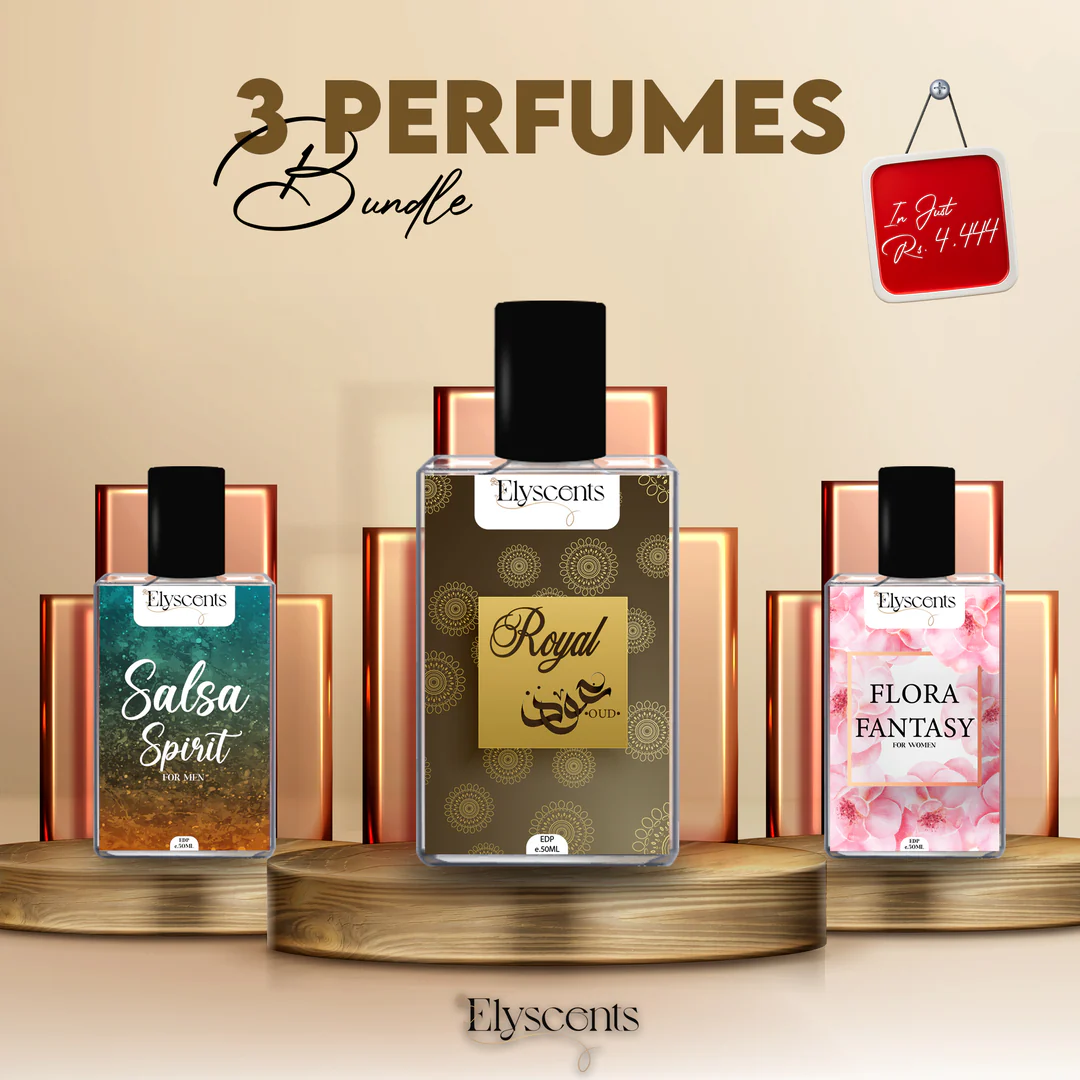
Best Perfumes for Every Occasion
- Work & Office Wear: Subtle floral or light fruity scents for a professional yet fresh aura.
- Casual Outings: Fun and energetic fruity blends to keep your vibe cheerful.
- Evenings & Parties: Musky, woody, or oriental perfumes that exude elegance.
- Gifting: Our women’s perfumes make thoughtful and memorable gifts for birthdays, anniversaries, or weddings.
Buy Ladies' Perfumes Online in Pakistan
Shopping for ladies' perfumes in Pakistan has never been easier. However, now you can:
- Order online with fast delivery across Karachi, Lahore, Islamabad, and all major cities.
- Choose from full-size bottles or explore our mini perfumes to test multiple scents before committing.
- Enjoy premium-quality fragrances without overspending.
Select options This product has multiple variants. The options may be chosen on the product page -
Pencil
Mechanical pencils offer a consistent line width without the need for sharpening, making them ideal for precise work. They are refillable, reducing waste, and many feature advanced mechanisms to prevent lead breakage.Top picks for drafting and precise writing- Uni Kuru Toga Pipe Slide: This mechanical pencil is a top choice for sharp, clean lines because of its unique lead-rotation mechanism. As you write, the lead rotates slightly to prevent the tip from wearing down on one side, ensuring a consistently fine point.
- rOtring 600 Mechanical Pencil 1: A classic drafting pencil with a substantial, all-metal hexagonal barrel and a knurled anti-slip grip. It provides excellent lead stability for reliable, exact strokes but is not retractable, making it better for a desk than a pocket.
- Blick Premier Mechanical Pencil: This model offers premium features at a mid-range price, including a metal body and a cushioning mechanism to prevent lead breakage. It also has an intuitive "double-knock" feature to retract the tip
Select options This product has multiple variants. The options may be chosen on the product page -
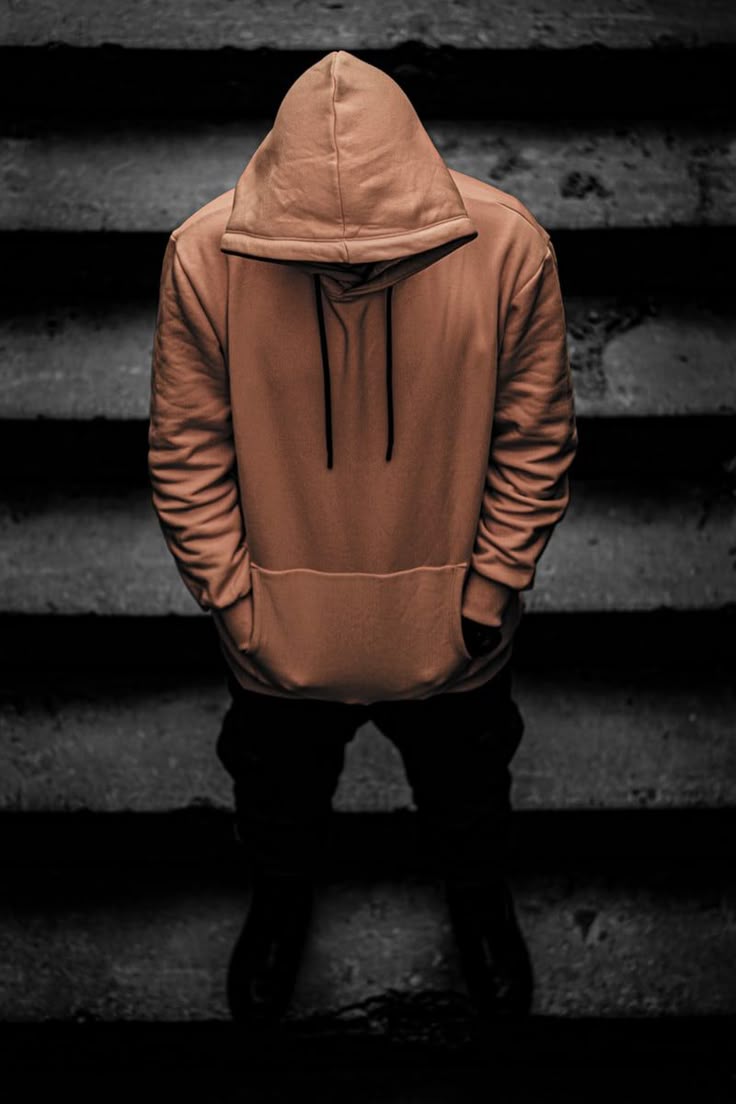
Hoodie
In the early 21st century, the image of hackers became associated with hoodies.[11][12] Elliot Alderson, the protagonist of Mr Robot, is a vigilante hacker who constantly wears a black hoodie.[12]Hackers
By country
In June 2011, police in Wynnum, Brisbane, Australia launched a "Hoodie Free Zone" initiative, with shopkeepers encouraged to ask hoodie-wearers to leave. The zone was part of an initiative to educate businesses on how to avoid armed robberies, in which the hoodie type of clothing was reportedly often worn.[13]Australia
Across Canada, hoodies are a popular clothing item. They are sometimes worn under a coat or jacket to provide an extra layer of clothing during the winter. In Saskatchewan, only the zipperless, pullover version of the garment is referred to as the noun "Bunny Hug.Canada

Reviews
There are no reviews yet.